

Goal of the Project
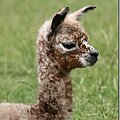
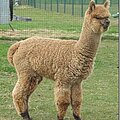
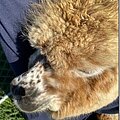
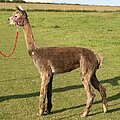
Even well-established pairings can sometimes lead to surprises. Spots suddenly appear unexpectedly, lighter fibers emerge on the neck, or inexplicable skin coloration develops. Is this a sign of Appaloosa, spotted, or roan? Or something else entirely? Alpacas with the genotype EEaa or Eeaa could and "should" actually be black. Instead, they are brown or even light brown.
To answer these questions, a color gene panel was established. The project aims to better understand the genetics of these color patterns and identify their genetic origins. If successful, this will be another milestone in alpaca breeding.
With 484 alpacas from breeding farms across Europe, this project is not only the largest in Europe but also one of the largest research projects on alpaca color genetics worldwide. The collaboration of numerous breeding farms, which made the specific research approach for this study possible, is also unique.
It is to acknowledge and appreciate the years of work by many scientists worldwide in this field, as well as the development of the first color gene test by Kylie Munyard together with Neogen. Only the testing of many thousands of alpacas made a comprehensive comparison between phenotype and genotype possible, thus providing the basis for this study.
First Results
The first exciting results are in!
As is common in science, we're being cautious with our wording. After all, no one knows for sure if things are really as they currently appear. This is also reflected in the initial findings of our study, which challenge some of the existing assumptions about alpaca color genetics or shed new light on them.
It's important to understand that everything that has been investigated and done so far is the foundation for new insights! And what we know today is the basis for tomorrow's knowledge! It's not about right or wrong, but about progress that helps us to breed ever better and more precisely.
What did we find so far?
Overall, it appears that a variety of genes, gene variations, and gene combinations influence the fleece color of alpacas. One of the most important findings already seems to be that these genetic variants and combinations are practically undetectable externally, i.e., in the phenotype. For example, what was previously referred to as roan has very different genetic causes!
Dilution gene: The origin of this study was to find the cause of the sometimes significant differences between phenotype and genotype. For example, why genetically black alpacas appear brown or even lighter, and what causes the variations in color intensity. We currently assume that the sometimes large discrepancies between phenotype and the genotype of the base color can now be explained and may have several, sometimes quite different, genetic causes and interactions
White Spot: The gene for White Spot has been identified with a very high degree of probability. Interestingly, White Spot is often not phenotypically apparent. Instead, this gene likely leads not only to white spots, as previously assumed, but can also cause changes in fleece color or even roan-like patterns.
Piebald: This gene has also been identified with a very high degree of probability, but it exhibits a peculiarity that requires further investigation. Presumably, piebald is not phenotypically apparent in heterozygous individuals, which would explain why piebald offspring can result from phenotypically solid-colored parents.
Appaloosa: Several genes appear to be responsible for the Appaloosa pattern. There seem to be "true" Appaloosa genes and others that cause an Appaloosa-like pattern. This will be investigated further in Panel 2.
Project Partners and Participants
The project is being conducted and scientifically supervised by the University of Tübingen, specifically by the Institutes of Neuroanatomy and Developmental Biology, Medical Genetics and Applied Genomics, and Genome Data Analysis and Bioinformatics.
Over the past two years, numerous breeding farms have made a significant contribution by providing their color gene test results, as well as images and descriptions of over 1,000 alpacas. These comprehensive comparisons and analyses are essential to making this project possible.
Panel 1 involved 14 farms, which provided samples from a total of 100 selected alpacas with specific color genotypes and phenotypes. Panel 2 includes 29 farms from several European countries with about 400 alpacas.
The project is supported by the Austrian Alpaca Breeders' Association. Many thanks on behalf of all alpaca breeders!
"As the Austrian Alpaca Breeders' Association, we place great value on fundamental scientific research in the alpaca field. A better understanding of genetic relationships is essential for the sustainable breeding of these fascinating animals. Therefore, we wholeheartedly support the Alpaca Color Gene Panel research project. This research will not only expand our knowledge of alpaca genetics but also contribute to developing a targeted and sustainable breeding strategy for the future.
We are delighted to be part of this groundbreaking project and eagerly await the results!"
President of the Austrian Alpaca Breeders' Association
Organisation professionnelle représentative d’une filière fondée sur une fibre animale
"En tant qu’organisation professionnelle représentative d’une filière fondée sur une fibre animale, nous assumons une triple mission : veiller au respect absolu du bien-être animal, soutenir la pérennité économique de tous les acteurs de la filière, et répondre aux attentes sociétales légitimes liées à nos activités.
Chaque initiative, qu’elle émane du secteur privé, public ou académique, et qui enrichit nos connaissances et notre maîtrise, nous offre des outils précieux pour optimiser la gestion de nos activités.
C’est dans cette perspective que l’Alliance Nationale Interprofessionnelle des Métiers de l’Alpaga soutient activement le projet de recherche sur la génétique des couleurs et des motifs chez l’alpaga. Cette étude permettra aux éleveurs du monde entier de mieux comprendre et gérer leurs programmes de reproduction et à réduire l’incidence des animaux non désirés.
La maîtrise repose d’abord sur la connaissance et l’expertise."
"As a professional association for the animal fiber-based industry, we pursue a threefold mission: the unconditional respect for animal welfare, the promotion of economic sustainability for all stakeholders, and the fulfillment of legitimate societal expectations regarding our work.
Every initiative, whether from the private, public, or academic sector, that expands our knowledge and expertise provides us with valuable tools for optimizing our work.
Against this backdrop, the National Interprofessional Alliance of the Alpaca Industry actively supports the research project on the genetics of colors and color patterns in alpacas. This study will help breeders worldwide to better understand and manage their breeding programs as to be able to selectively breed for specific traits.
Expertise is based primarily on knowledge and experience."